Toolbox / Free guide
Free guide · 3 steps · 4 field testsThe Netflix Hook Formula
Think about your favourite series. The first 30 seconds of every episode leave you needing to know what happens next. The ads that stop your scroll use the same structure, and you can use it today.
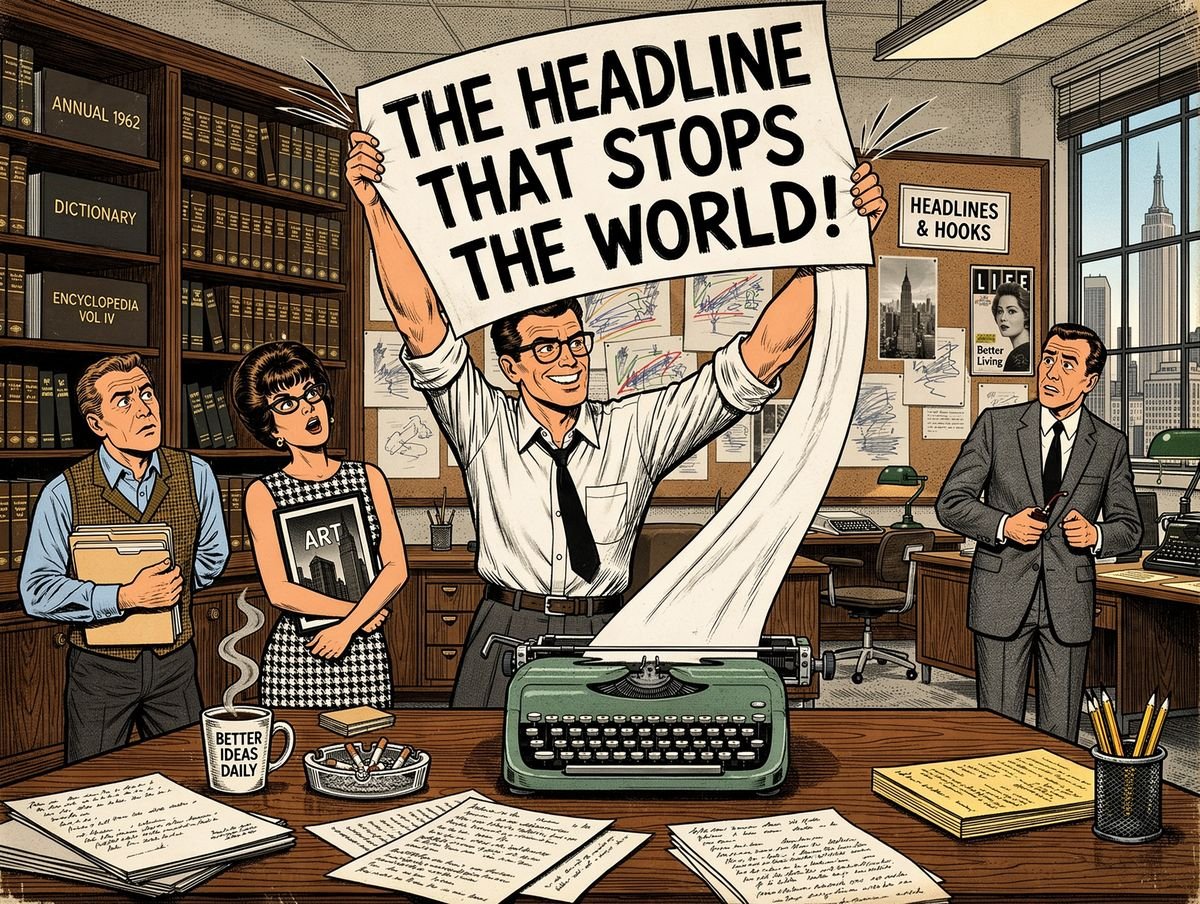
Three parts. That's it.
Open with conflict
Hint at resolution
Delay the reveal
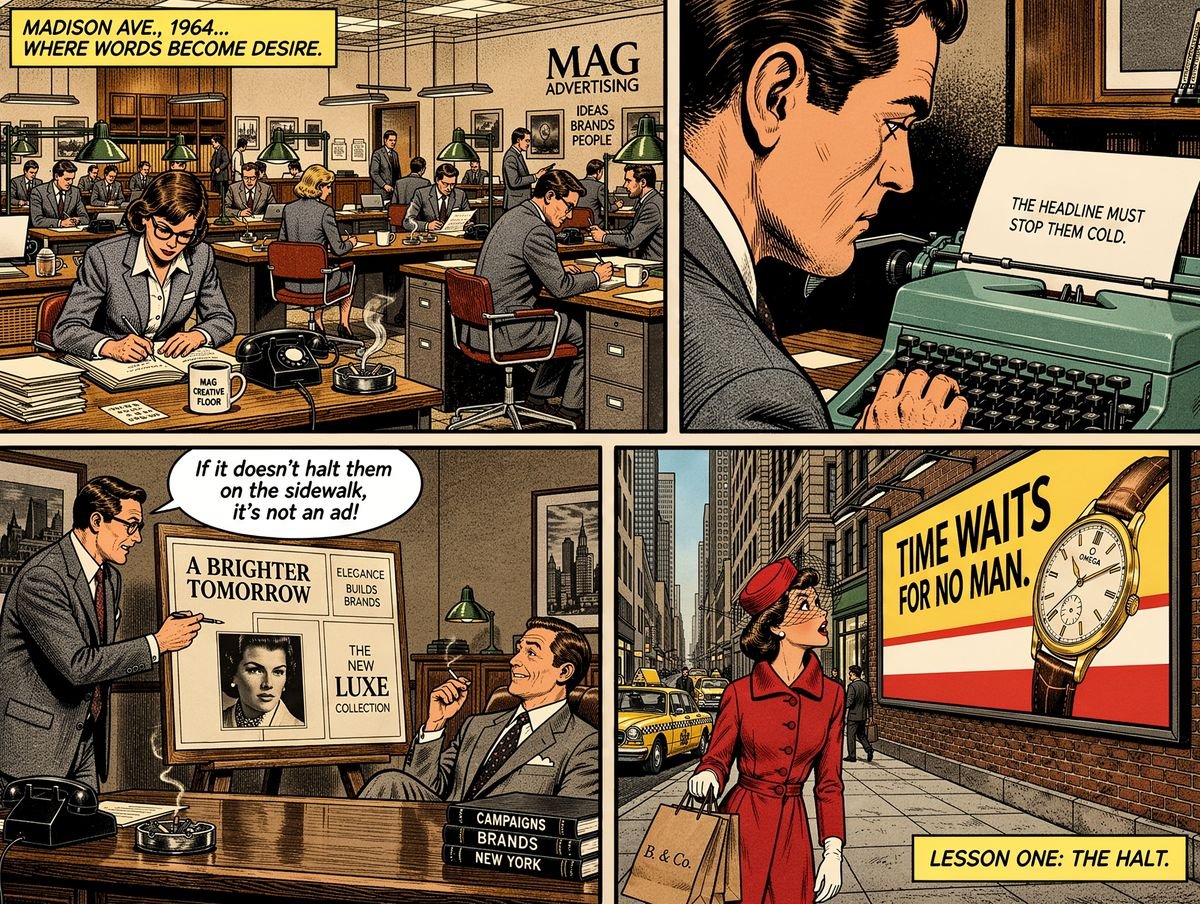
Open with conflict
Problems stop the scroll
Conflict grabs attention because it taps straight into curiosity and emotion. We're wired to notice problems: we want to know what went wrong, and why.
Open on a challenge, a pain point or a moment of crisis. Keep it short, relatable and intriguing.
- Urgency: losing followers is a nightmare for anyone who uses social media for business.
- Fear: people worry about security and control over their accounts.
- Focus on one specific moment of frustration or failure.
- Use emotional words like “shocked”, “devastated” or “overwhelmed”.
- Don't explain too much. The mystery keeps people hooked.
Write five opening lines for your next ad, each built on a different moment of conflict your customer has lived through. Keep the one you'd stop scrolling for.
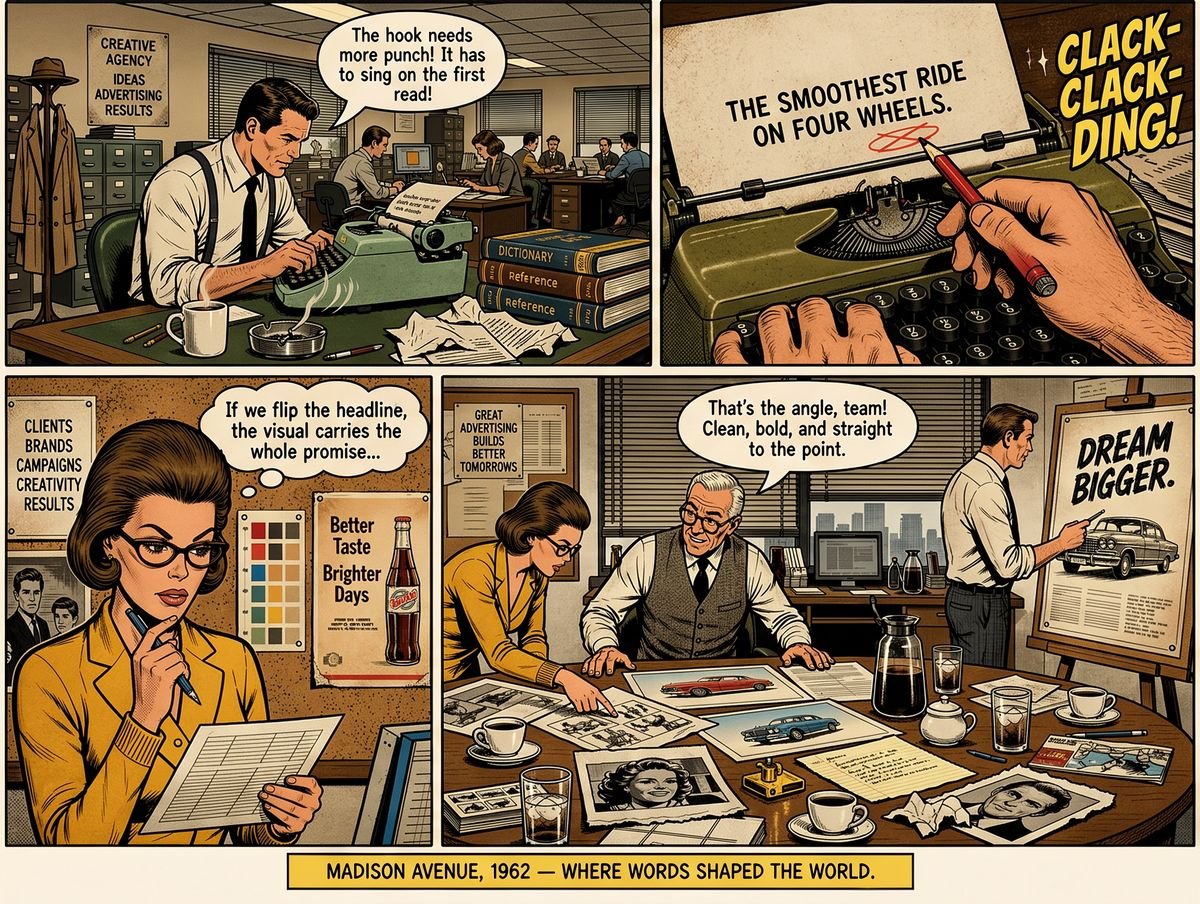
Hint at resolution
Plant a seed of hope
Once conflict has drawn people in, hint at the solution without giving the story away. This builds anticipation and keeps readers invested.
Make it clear the problem was solved. Don't reveal how just yet.
- It teases a solution: people love solutions, especially easy or unusual ones.
- It builds trust: you're quietly signalling that you've already worked it out.
- Use turns like “That's when I learned”, “Until I tried” or “I discovered”.
- Be specific enough to spark curiosity, vague enough to keep them guessing.
- Show how the solution is different, unexpected or new.
Write the turn for your best opening line. Read it aloud: does it promise an answer without giving it away?
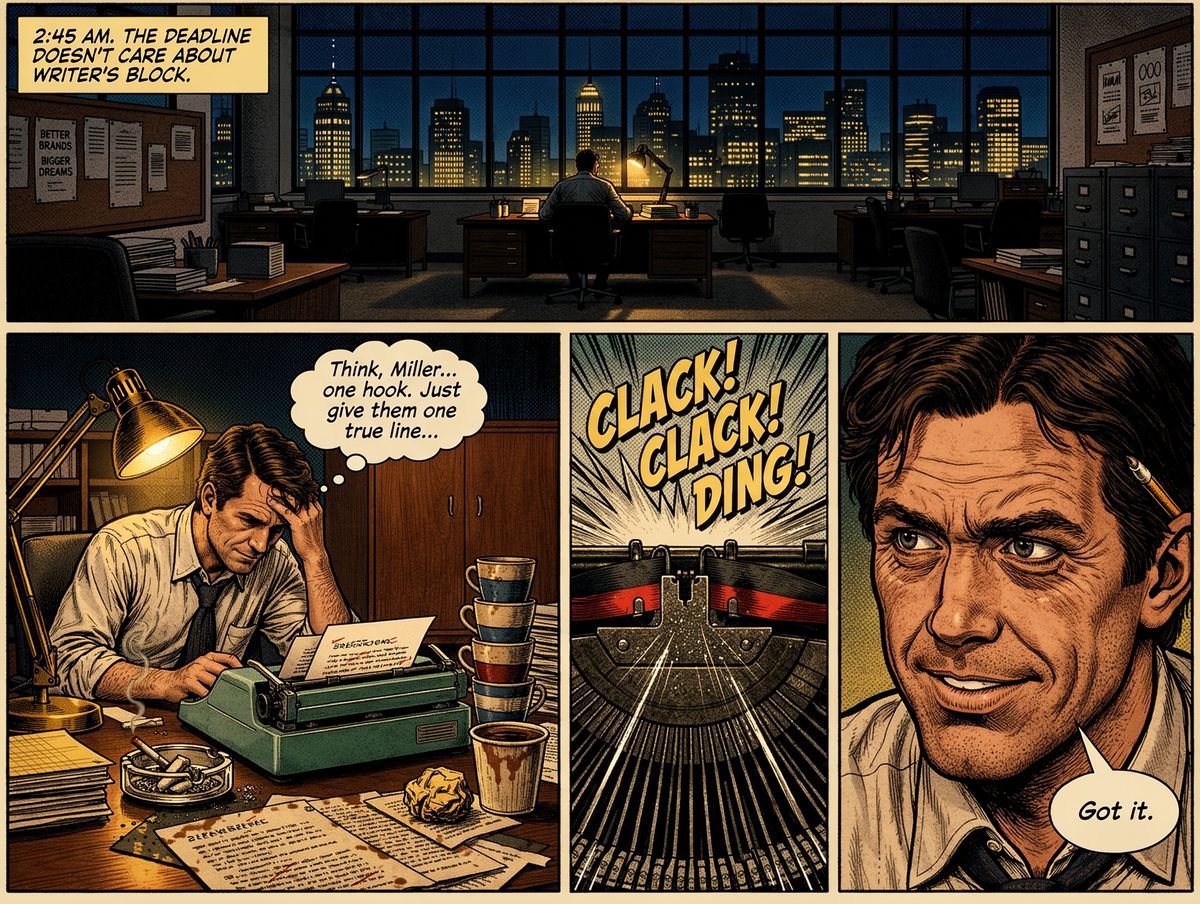
Delay the reveal
Make them need the next line
Instead of revealing the solution straight away, delay it with a moment of reflection, realisation or suspense.
The reveal is close, and your reader can feel it. That's what keeps them reading.
- It maintains suspense: the answer is close, but they still don't know exactly what it is.
- It creates a lightbulb moment: people stay to find out what you learned.
- Use lines like “That's when it hit me” or “The answer was right in front of me”.
- Show the emotional shift: frustration to clarity, failure to success.
- Keep the tone conversational and relatable.
Add a delayed reveal to your hook, then check that your landing page or next paragraph actually delivers the answer it promises.
One hook, three parts.
Here's the formula in action for a small business targeting freelancers who struggle with time management.
A relatable struggle: long hours, missed deadlines.
The problem was solved. We don't yet know how.
“This one thing” stays vague, so curiosity pulls the click.
Three psychological principles.
Curiosity
People hate unanswered questions. Conflict plus a delayed reveal opens a gap they need to close.
Emotion
Conflict triggers a feeling, and feeling makes your audience care about the outcome.
Relatability
When you name a common struggle, people see themselves in your story and stay for the solution.
Four moves, every time.
Not every hook will land, so test variations and let the numbers decide.
- Try different kinds of conflict: personal stories, industry trends or hypothetical scenarios.
- Experiment with how much of the resolution you give away.
- Test different calls to action to see which drives the most engagement.
- Use visuals. Pair your copy with an image or video that amplifies the story.
- Keep it skimmable. Two or three sentences per section.
- Speak to them. Use “you” and “your” so the story feels personal.
One complete hook, start to click.
A hook is a promise.
Only tell stories that really happened, and make sure whatever you tease is waiting on the other side of the click. A cliffhanger with no next episode doesn't hook people. It teaches them to ignore you.
Want to know why curiosity gaps work? Lesson 03 of the Brain-Proof Playbook explains it, and where the line is.