Join free

Toolbox / Free guide

Free guide · 10 laws · 10 field tests

The Hidden Codex of Copy

Ten laws of persuasive writing, once passed hand to hand behind closed doors. Now on the shelf for anyone who wants them.

Read law I →
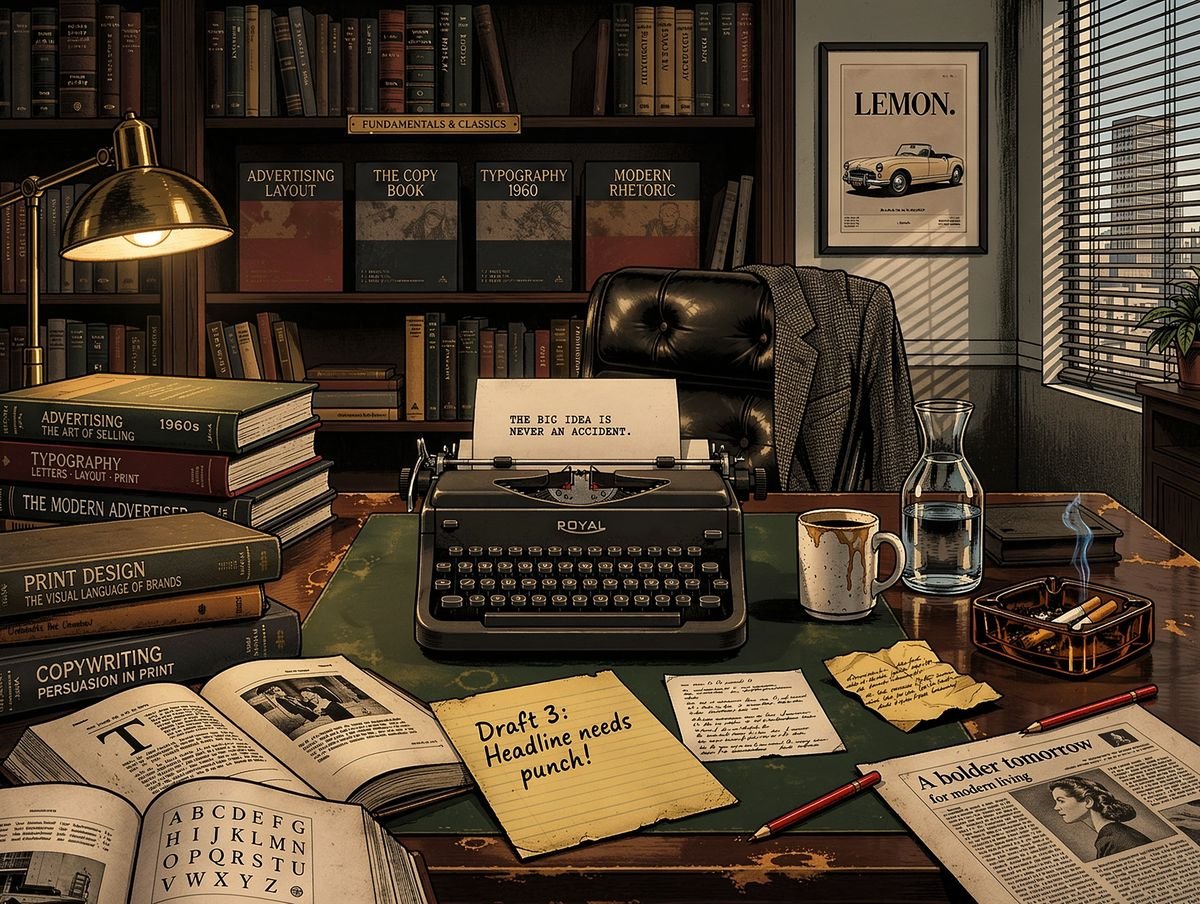
Comic: an old copywriter's desk piled with classic advertising books
THE CODEX · HANDLE WITH CARE
Before you read

This text was never meant for the market stall or the public square.

It was passed hand to hand, mentor to apprentice, beneath candlelight and closed doors.

Those who understood it shaped opinions, moved coin, and bent attention without raising their voice.

Read slowly. These rules still work, even now.

How to use this guide
  1. Keep one real piece of your own copy beside you: an email, an ad, a sales page or a post.
  2. Read one law, then run its field test on that piece before moving on.
  3. By law ten you'll have rebuilt it from the first line to the final word.
ILaw 01

The Law of Attention

Nothing follows if the eye does not stop

The first line was treated as sacred ink. If it failed, the rest of the scroll might as well remain blank.

The old writers knew this: people do not read. They notice.

A sharp promise. A quiet shock. A sentence that feels unfinished unless the reader steps closer.

If attention is not seized at once, nothing that follows has any weight.

FIELD TEST!

Write ten different first lines for your piece. Cover everything below each one and ask: would a stranger read line two?
IILaw 02

The Law of the Single Desire

One want. Never many.

The Codex warns against crowded intentions. One scroll. One outcome. One clear want planted in the reader's mind.

When copy tries to please many urges, it satisfies none. When it speaks to one need, it feels personal.

The masters chose a single desire and carved everything else away.

FIELD TEST!

Finish this in under twelve words: "This piece exists to make the reader want…" Cut every line that doesn't serve that answer.

IIILaw 03

The Law of the Reader's Mirror

Write of them, not of yourself

The ancients scratched a simple reminder into the margins: "The reader seeks themselves in every line."

Achievements, features, clever phrasing: all were secondary. The copy was shaped as a reflection of their worries, their private hopes, their unspoken questions.

When the reader feels seen, resistance softens.

FIELD TEST!

Count every "we", "our" and "I" in your piece, then every "you" and "your". Rewrite until "you" wins comfortably.

Comic: an old copywriter's desk piled with classic advertising books
FROM THE COPY ROOM ARCHIVE
IVLaw 04

The Law of Pain Before Pleasure

The wound opens the ear

Joy alone rarely persuaded. Discomfort did.

The Codex teaches that before offering relief, the ache must be named. Not exaggerated. Not shouted. Simply recognised.

When the reader thinks, "That is exactly it", the writer earns the right to continue. Only then may the remedy be shown.

FIELD TEST!

Before you mention any solution, describe the reader's problem in the words they'd use to a friend at the pub.

VLaw 05

The Law of Plain Speech

Clarity outranks cleverness

The royal scribes distrusted ornate language. They preferred words that travelled straight.

If a sentence could be misunderstood, it was rewritten. If a phrase required effort, it was removed.

The goal was never admiration. The goal was action. Confusion was treated as failure.

FIELD TEST!

Read your piece aloud. Every sentence you stumble over gets rewritten until it doesn't.

VILaw 06

The Law of Proof

Claims must stand on something solid

Promises without evidence were marked as heresy. The Codex demanded signs: witness accounts, demonstrated results, visible outcomes.

Not loud boasting. Quiet certainty.

Proof calms the cautious mind and gives courage to move forward.

FIELD TEST!

Beside every claim in your piece, write the evidence that backs it. Any claim left standing alone gets proven or cut.

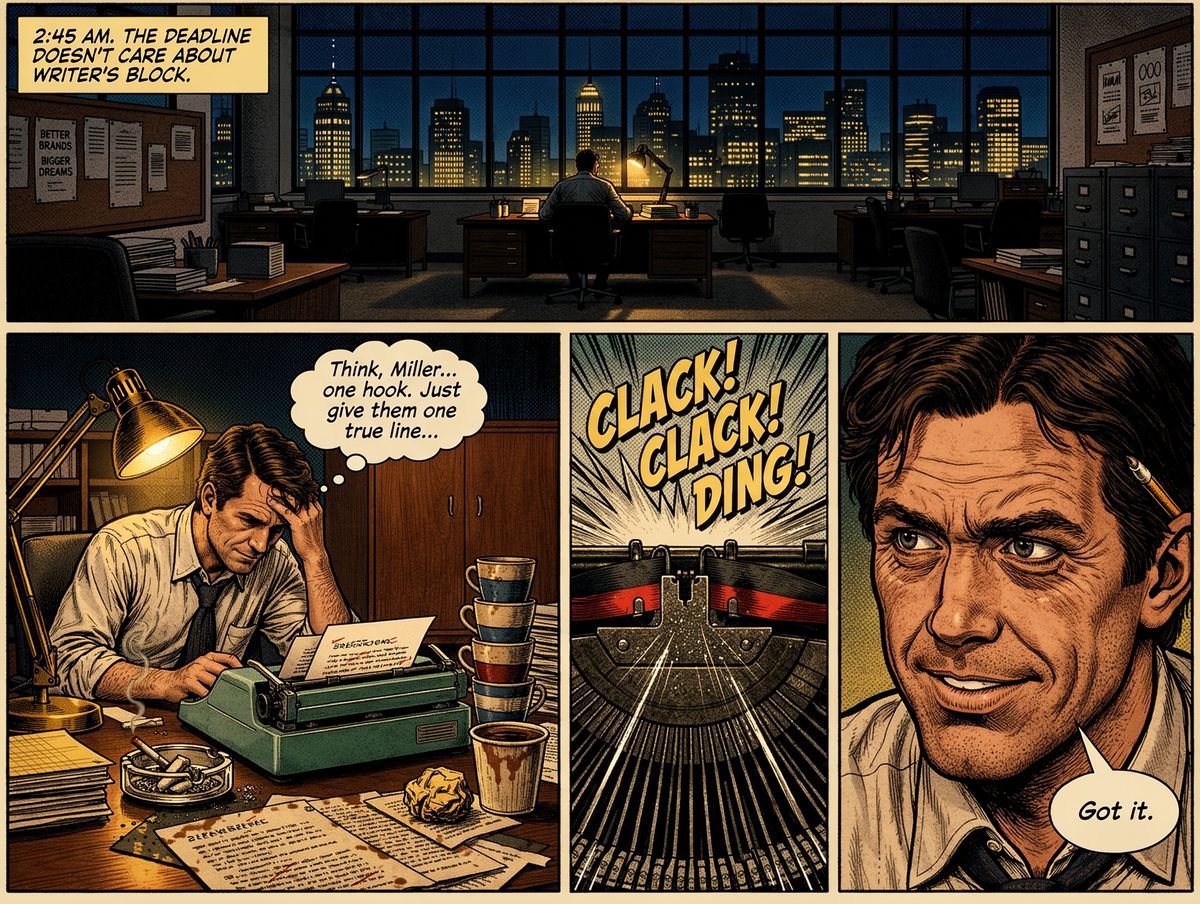
Comic: a copywriter typing late at night under a desk lamp
THE OLD RULES STILL WORK, EVEN NOW
VIILaw 07

The Law of Momentum

Each line must pull the next closer

The masters wrote with flow in mind. Short lines to quicken pace. Longer ones to slow it.

Every sentence had a task: carry the reader one step further without friction.

When momentum breaks, doubt enters.

FIELD TEST!

Highlight the last sentence of every paragraph. Does each one make the next paragraph feel necessary? Fix the ones that don't.

VIIILaw 08

The Law of Simplicity of Choice

Too many paths lead nowhere

The Codex forbade excess options. One clear action was placed before the reader. It was easy to understand. Easy to take.

When choice multiplies, hesitation grows. When the path is clear, movement follows.

FIELD TEST!

Count every link and button in your piece. Remove all of them except the one action you most want taken.

IXLaw 09

The Law of Authority

Confidence must be felt, not announced

The true writers never claimed mastery outright. Their certainty showed through calm instruction and steady tone.

No begging. No pressure. No frantic urgency.

Authority came from control of the message, not volume.

FIELD TEST!

Delete every "really", "amazing" and exclamation mark from one page. Read it again and notice how much more certain it sounds.

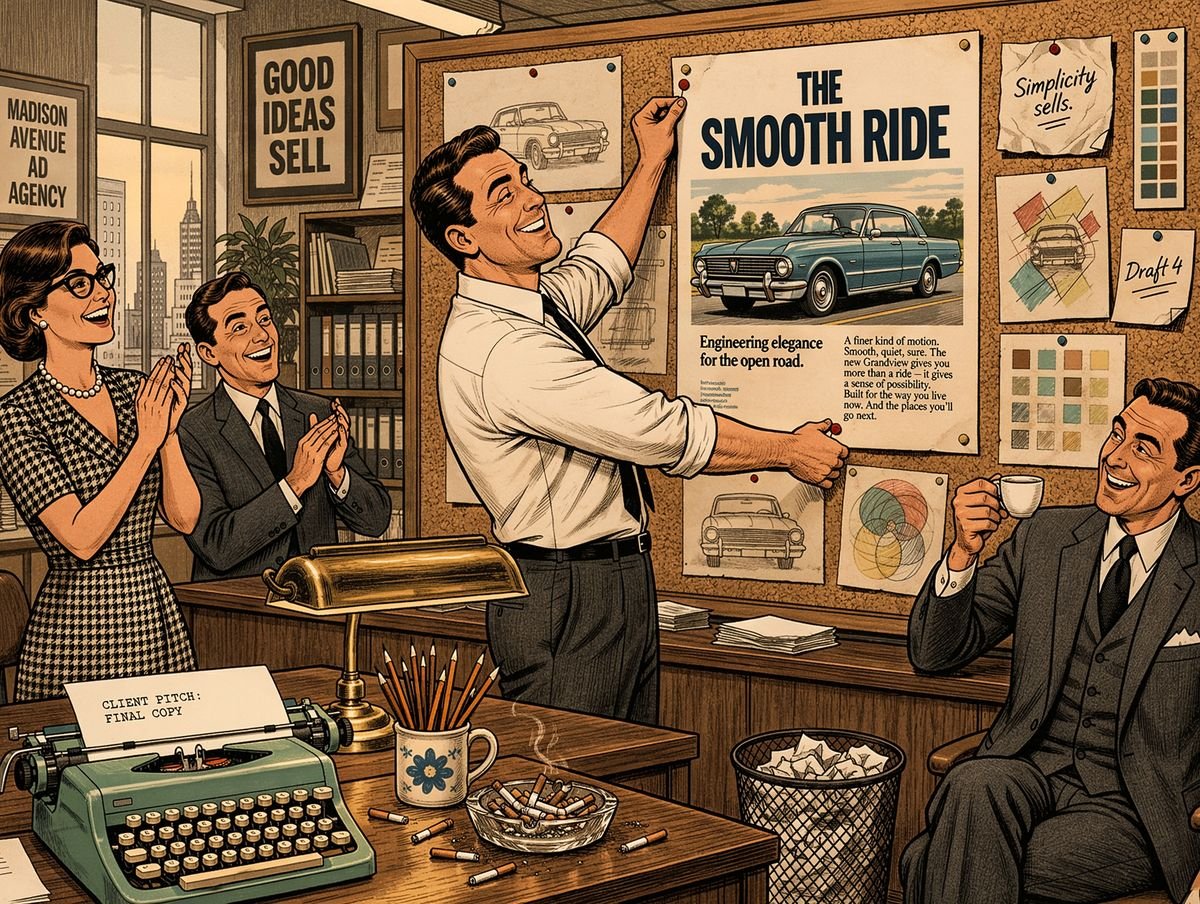
Comic: colleagues applaud as a finished advert is pinned to the wall
WHEN THE LAWS ARE KEPT…
XLaw 10

The Law of Silence

Leave space for the mind to agree

The final teaching is the most overlooked. Not everything must be said.

A pause. A gap. A line that allows the reader to complete the thought themselves.

What the reader concludes alone is held most firmly.

FIELD TEST!

End your next email on a question instead of an explanation. Let the reader finish the thought.

A note from the margin

A warning, written smaller than the rest.

"These laws work whether used wisely or carelessly. Choose your hand with care."

You now hold the same knowledge the old masters guarded. Use it to help people make decisions that are good for them. What you do with it decides the outcome.

Your field log

The three laws your copy needed most

Your notes save in this browser as you type.